When I see graciousness in action, I try to remember those experiences--in the hopes of becoming more gracious myself.
While we were selling our Women of Hope handicrafts in Abuja, a woman looked through the five aprons we had on display. After she decided on a lime green batik apron, I noticed a small hole in the fabric. I told her, "Oh, I'm sorry, this one has a small flaw. Can you choose another color?" And I took the lime green apron off the display table and packed it away.
She checked through the other aprons, but couldn't really find one that she liked as well. Then she said, "Just let me buy that one--someone's got to take it."
We thanked her and threw in an extra gift bag for the favor she did for us. She was an example of graciousness in action for me.
Friday, December 2, 2011

Thursday, December 1, 2011
World AIDS Day 2011
Every December 1, we commemorate World AIDS Day. We remember those who have died and we celebrate the advances that have been made in the care and support of people living with HIV/AIDS.
Our women will be participating in a march through part of Jos today along with hundreds of others.
Yesterday, we marked the event in two special ways.
Six of our women acted out a 10-minute drama during the Hillcrest chapel service. They showed the story of a young woman who was just diagnosed with HIV and how her auntie threw her out of the house because of it. As she was walking around looking for help, she encountered someone who was willing to house her. That person also introduced her to a ministry with a sewing program where she could receive help. After the drama, all of the women introduced themselves and told a little bit of their own stories.
The drama was based on an experience that some of them have had. Thankfully, there are some families that continue to show love and support in the midst of an HIV diagnosis.
Bayo and I traveled to the US Embassy in Abuja (capital) in order to take part in their commemoration of World AIDS Day. Esther David, one of the first women in the sewing program, also went along. We were able to share briefly about our work with women and children. Esther shared boldly, as she always does, about living with HIV, and her gratefulness to Mashiah Foundation for care and support and also to PEPFAR for providing her with free drugs for the past nine years.
PEPFAR stands for President's Emergency Plan for AIDS Relief. It is the largest humanitarian relief ever given by the United States. HIV-infected Nigerians are incredibly grateful for this gift. PEPFAR works in 15 countries around the world.
Esther testified that had it not been for PEPFAR she may not have lived to raise her four children, ranging in age from 9-19.
The day would not be complete without selling our handicrafts made by the Women of Hope. It was a really great day in Abuja.
Our women will be participating in a march through part of Jos today along with hundreds of others.
Yesterday, we marked the event in two special ways.
Six of our women acted out a 10-minute drama during the Hillcrest chapel service. They showed the story of a young woman who was just diagnosed with HIV and how her auntie threw her out of the house because of it. As she was walking around looking for help, she encountered someone who was willing to house her. That person also introduced her to a ministry with a sewing program where she could receive help. After the drama, all of the women introduced themselves and told a little bit of their own stories.
The drama was based on an experience that some of them have had. Thankfully, there are some families that continue to show love and support in the midst of an HIV diagnosis.
Bayo and I traveled to the US Embassy in Abuja (capital) in order to take part in their commemoration of World AIDS Day. Esther David, one of the first women in the sewing program, also went along. We were able to share briefly about our work with women and children. Esther shared boldly, as she always does, about living with HIV, and her gratefulness to Mashiah Foundation for care and support and also to PEPFAR for providing her with free drugs for the past nine years.
PEPFAR stands for President's Emergency Plan for AIDS Relief. It is the largest humanitarian relief ever given by the United States. HIV-infected Nigerians are incredibly grateful for this gift. PEPFAR works in 15 countries around the world.
Esther testified that had it not been for PEPFAR she may not have lived to raise her four children, ranging in age from 9-19.
The day would not be complete without selling our handicrafts made by the Women of Hope. It was a really great day in Abuja.
Wednesday, November 30, 2011
The Orphan Boys
We have continued to get to know our new family of orphan boys. They spend a lot of time at Bezer Home as their own home is just a short distance from us.
The other day I saw the 10-year-old engaged in full-face, open-mouth laughter. What an incredible sight! In the few months I have known him, he has progressed from a blank, vacant stare to flickers of smiles and now even bold laughter. It's amazing what food and love can do.
Two of the older sisters are now enrolled in our sewing program. It's great to see their determination to work hard and earn money.
In addition to what the sisters are earning, we have been giving them some food items as well as a little weekly cash to buy more food items. We have found that it's a real balancing act when helping someone and trying not to create dependency.
The other day I saw the 10-year-old engaged in full-face, open-mouth laughter. What an incredible sight! In the few months I have known him, he has progressed from a blank, vacant stare to flickers of smiles and now even bold laughter. It's amazing what food and love can do.
Two of the older sisters are now enrolled in our sewing program. It's great to see their determination to work hard and earn money.
In addition to what the sisters are earning, we have been giving them some food items as well as a little weekly cash to buy more food items. We have found that it's a real balancing act when helping someone and trying not to create dependency.
Wednesday, October 12, 2011
A Home Visit
Today a friend and I visited the hungry boys in their home. From Bezer Home, we trekked along muddy paths, crossed a small stream, and then meandered on various paths as we followed the boys to their home.
They live in a decent home by local standards. I was pleasantly surprised when I saw it. Their father built the home before he died, and it is now owned by the children.
But as we visited further, we realized that the boys and their two older siblings and a baby all share one room of the house while the other rooms are rented out to tenants. The problem is that the tenants are not current with paying their rent. They are blatantly taking advantage of these young orphans and their inexperience.
For the first time, I heard the whole story of the eight children left behind. The 16 -old was able to tell us the exact dates when their parents died. Almost three years ago their parents died within three weeks of each other. While on his deathbed, the father begged his children to get an education, as that was the only way they could get ahead in life.
But how do you get an education when you don’t have money to pay school fees and your main concern is how to feed yourself every day?
The boys shared that every day they look for small jobs in their community so they can earn some small change to put something in their bellies. Many times they pack sand from the stream and sell it to people who are building houses. I shared another small job opportunity with the boys and asked them to tell me by tomorrow if that is something they want to do. They are eager to work and eager to learn.
Their older sister just joined the sewing program at Bezer Home. We are hopeful that in a few months she will be earning some money to help her siblings.
I asked them, “What’s your biggest problem right now that you need help with?” Fully expecting the answer to be ‘food,’ I was quite surprised when the eldest said, “My education.”
I said, “Well, we’ve got that taken care of for now. I hope you understand why I had to put you in 3rd grade. I don’t want you to feel bad about that.”
He said, “I finished 6th grade, but I couldn’t read or write so I know you had to put me in a lower level.”
I continued, “I hope you boys won’t run away from the school.” They shook their heads and laughed quietly. I could see there was no chance of that happening.
We left some raw food ingredients with them as well as promises to see how we can help them solve some of their immediate problems. Our goal is to help this family figure out how to sustain themselves. We want to be careful that we don’t create an unhealthy dependency.
They live in a decent home by local standards. I was pleasantly surprised when I saw it. Their father built the home before he died, and it is now owned by the children.
But as we visited further, we realized that the boys and their two older siblings and a baby all share one room of the house while the other rooms are rented out to tenants. The problem is that the tenants are not current with paying their rent. They are blatantly taking advantage of these young orphans and their inexperience.
For the first time, I heard the whole story of the eight children left behind. The 16 -old was able to tell us the exact dates when their parents died. Almost three years ago their parents died within three weeks of each other. While on his deathbed, the father begged his children to get an education, as that was the only way they could get ahead in life.
But how do you get an education when you don’t have money to pay school fees and your main concern is how to feed yourself every day?
The boys shared that every day they look for small jobs in their community so they can earn some small change to put something in their bellies. Many times they pack sand from the stream and sell it to people who are building houses. I shared another small job opportunity with the boys and asked them to tell me by tomorrow if that is something they want to do. They are eager to work and eager to learn.
Their older sister just joined the sewing program at Bezer Home. We are hopeful that in a few months she will be earning some money to help her siblings.
I asked them, “What’s your biggest problem right now that you need help with?” Fully expecting the answer to be ‘food,’ I was quite surprised when the eldest said, “My education.”
I said, “Well, we’ve got that taken care of for now. I hope you understand why I had to put you in 3rd grade. I don’t want you to feel bad about that.”
He said, “I finished 6th grade, but I couldn’t read or write so I know you had to put me in a lower level.”
I continued, “I hope you boys won’t run away from the school.” They shook their heads and laughed quietly. I could see there was no chance of that happening.
We left some raw food ingredients with them as well as promises to see how we can help them solve some of their immediate problems. Our goal is to help this family figure out how to sustain themselves. We want to be careful that we don’t create an unhealthy dependency.
Friday, September 30, 2011
The Power of Food
This week I learned that our three hungry orphan boys often quell their hunger with a local alcoholic brew made from corn. It costs just pennies for a large bowl; perhaps it's even given to them for free. It fills them, dulls their senses, and allows them to sleep without being aware of the gnawing hunger in their stomachs.
As I have reflected on their feeding situation, I have been forced to really look at my own use and mis-use of food.
How often have I discovered a container of moldy food in my fridge? Why do I allow this to happen? I could blame it on the erratic electricity, but let me look a little closer to home and ask why I didn't care enough about using that food before it spoiled.
For years I have not allowed my children to use the phrase, "I'm starving," when they really mean "I'm hungry." Should we even be allowed to use the phrase "I'm hungry"? Maybe it would be more accurate to say, "I'd like something to eat."
How many times have I said, "There's nothing to eat in this house." No longer can I say such a thing. Even when there's 'nothing' in the house, there is still something.
Today my helper made a big batch of moi-moi (pronounced moy-moy) to take to my children's school for a celebration of Nigerian Independence Day. Moi-moi is basically steamed bean cakes. She took black-eyed peas (beans), 'washed' them until the outer casings came off, added onions, hot peppers, and salt; then blended it all together. She put the liquid in clear plastic bags with a chunk of boiled egg, and then boiled it until it became firm. Moi-moi is really a delicious, filling meal.
I took a bunch of moi-moi to Bezer Home for the three orphan boys and another family that is also hungry. I discreetly gave it to them, and they sat down and ate it in a quiet corner. About ten minutes later, I was shocked when I saw the two oldest boys swinging on the swing set with great fervor. And the youngest was contentedly sitting against the water tank looking at a book from school. This behavior was such a marked contrast to their normal look that it gave me pause. For now, it's really that simple: food brings joy and contentment and strength.
We are currently working on a plan to help the older boy earn some money on a daily basis. Our goal is always to encourage self-sufficiency and not dependency. Obviously with young orphaned children, there is a place for handouts. One of their older sisters will be joining the sewing program next week. Through that program she will be able to earn money to help herself and her brothers. In the meantime though we'll be bridging the gap.
As I have reflected on their feeding situation, I have been forced to really look at my own use and mis-use of food.
How often have I discovered a container of moldy food in my fridge? Why do I allow this to happen? I could blame it on the erratic electricity, but let me look a little closer to home and ask why I didn't care enough about using that food before it spoiled.
For years I have not allowed my children to use the phrase, "I'm starving," when they really mean "I'm hungry." Should we even be allowed to use the phrase "I'm hungry"? Maybe it would be more accurate to say, "I'd like something to eat."
How many times have I said, "There's nothing to eat in this house." No longer can I say such a thing. Even when there's 'nothing' in the house, there is still something.
Today my helper made a big batch of moi-moi (pronounced moy-moy) to take to my children's school for a celebration of Nigerian Independence Day. Moi-moi is basically steamed bean cakes. She took black-eyed peas (beans), 'washed' them until the outer casings came off, added onions, hot peppers, and salt; then blended it all together. She put the liquid in clear plastic bags with a chunk of boiled egg, and then boiled it until it became firm. Moi-moi is really a delicious, filling meal.
We are currently working on a plan to help the older boy earn some money on a daily basis. Our goal is always to encourage self-sufficiency and not dependency. Obviously with young orphaned children, there is a place for handouts. One of their older sisters will be joining the sewing program next week. Through that program she will be able to earn money to help herself and her brothers. In the meantime though we'll be bridging the gap.
Monday, September 26, 2011
The Problem of Math
I am passionate about basic math knowledge. Last week I gave math tests to all of the children at our school based on the grade they recently completed. All of them scored anywhere from 1-6 grade levels below where they should be. The problem is, they have simply been passed on to the next grade even when they cannot grasp the most basic math concepts at that level.
I have always loved math. I'm sure I had some excellent teachers over the years who cultivated that foundation. We intend to re-build that foundation for our students in our new school. Currently, each student attends two math classes every day. I even wanted it to be three math classes a day, but the teachers squelched that idea. I'm just trying to help the students catch up on math so they don't have to stay in secondary school until they're 25!
I'm grateful for people like my neighbor who volunteer their time to tutor some of our children in math. The one-on-one tutoring in invaluable. I know it has made a difference in this girl's life.

I'm grateful for people like my neighbor who volunteer their time to tutor some of our children in math. The one-on-one tutoring in invaluable. I know it has made a difference in this girl's life.

In general, our students have a fear of math. We are hoping we can help them overcome that fear. We have hired three math teachers who have a solid understanding of math concepts. Here's to a great school year of learning the basics and building from there.
Sunday, September 25, 2011
Childhood?
I've really missed this place! I'm sitting here in my home office at 10:30 on a Sunday night. The house is quiet, the electricity is on, and I have some time to pray, "Direct my thoughts, Lord. What should I share?" Well, it's impossible to write about all that's gone on in the past six months so I guess I'll just share a story that's been on my heart for the past week.
We started our school last week. For the first time we invited children from the community to enroll. Prior to this, we have only worked with the orphans and vulnerable children we know through the ministry. Last Monday I took a few minutes to interview each new child to get some basic information.
As I was asking one young boy some questions, I realized that he couldn't really pay attention to me. Perhaps some of it was a language barrier, but I instinctively knew that he was hungry.
I asked his older brother if they had eaten that morning. No.
"When did you last eat?"
"The day before yesterday."
"I'm sure you had pap* for breakfast yesterday." Nope.
"I'm sure you had tea yesterday." Yes.
"I'm sure you had bread with your tea." Nope.
I take a closer look at the boy sitting before me. His brother says he's 9, but he looks 5.
They tell me more of their story:
Dad is dead.
Mom is dead.
Step-mom is dead. (Dad had two wives.)
Their older siblings try to feed them when they can, but food is not steady.
What kind of childhood is this?
The three youngest children have come to our school. They haven't been to school for a number of years. They are 16, 13, and 9, and none of them can read. That will be the first item on our agenda--after we fill their bellies.
*corn is soaked for 3 days, using fresh water every day, then ground, and then cooked into a porridge.
We started our school last week. For the first time we invited children from the community to enroll. Prior to this, we have only worked with the orphans and vulnerable children we know through the ministry. Last Monday I took a few minutes to interview each new child to get some basic information.
As I was asking one young boy some questions, I realized that he couldn't really pay attention to me. Perhaps some of it was a language barrier, but I instinctively knew that he was hungry.
I asked his older brother if they had eaten that morning. No.
"When did you last eat?"
"The day before yesterday."
"I'm sure you had pap* for breakfast yesterday." Nope.
"I'm sure you had tea yesterday." Yes.
"I'm sure you had bread with your tea." Nope.
I take a closer look at the boy sitting before me. His brother says he's 9, but he looks 5.
They tell me more of their story:
Dad is dead.
Mom is dead.
Step-mom is dead. (Dad had two wives.)
Their older siblings try to feed them when they can, but food is not steady.
What kind of childhood is this?
The three youngest children have come to our school. They haven't been to school for a number of years. They are 16, 13, and 9, and none of them can read. That will be the first item on our agenda--after we fill their bellies.
*corn is soaked for 3 days, using fresh water every day, then ground, and then cooked into a porridge.
Sunday, March 27, 2011
Fatima: Then and Now
It's March, and I recently remembered that Fatima came to us in March 2009. I can't remember if I've shown her before/after photos here.
Here is Fatima during those first days of complete incapacitation. She didn't have much hope for herself, but we did. By December of 2009, I was giving her 'orders' to make herself walk from her bedroom downstairs to the sewing room upstairs. That would take her nearly an hour. Eventually the tough love really paid off.
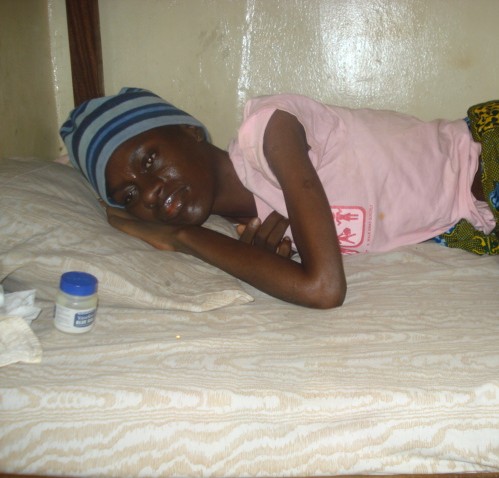
Here she is sometime in the first part of 2010, attending an individual literacy class--upstairs.

Here she is in February 2011, enjoying an orange.

And this photo was taken just last week. She has more than doubled her weight since we first met her. She used to walk with her body bent at a nearly 90 degree angle. Now she has just a very slight limp. I love the transformation we have seen in her.

Fatima no longer lives at Bezer Home; she has moved closer to her family. She still attends Monday fellowship and a sewing class during the week at Bezer Home.
When Bezer Home first started, we thought we were going to be doing hospice care. We are delighted that that has rarely been the case; rather our residents usually rise up and walk!
Subscribe to:
Posts (Atom)
